How to Tell If Peppercorns Are Spoiled vs Good: 3-Min Guide
How to Tell If Peppercorns Are Spoiled vs Good: Easy Kitchen Quality Check
Whole peppercorns are an essential spice in kitchens worldwide, adding a distinct aroma and sharp heat to countless dishes. Because peppercorns are a dried pantry staple, many people assume they last forever. However, knowing how to tell if peppercorns are spoiled vs still good is crucial for both food quality and health safety. Spoiled peppercorns lose their pungent flavor and can harbor harmful mold and harmful toxins like aflatoxin.
- Inspecting Visual Appearance and Color
The first step in determining how to tell if peppercorns are spoiled is checking their physical condition:
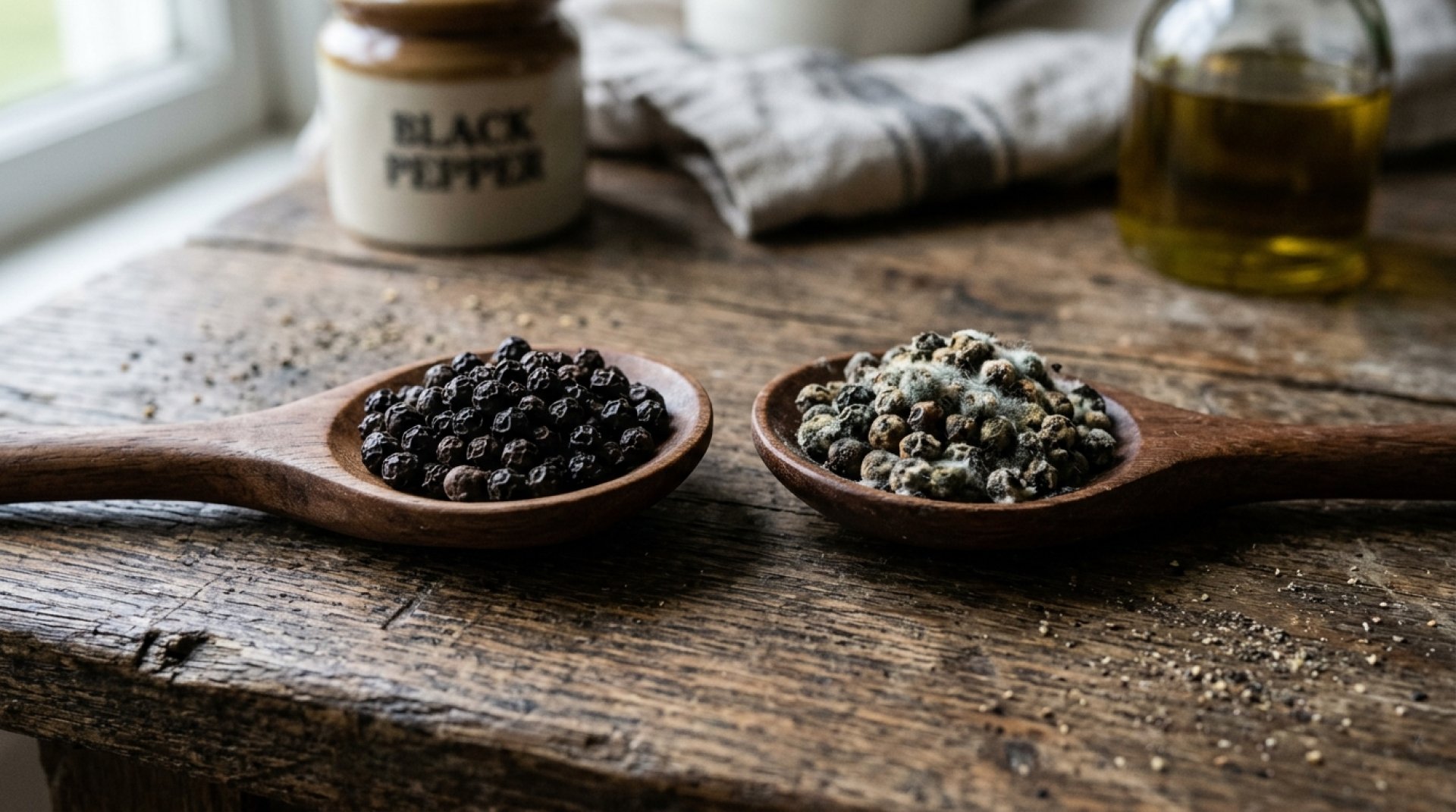
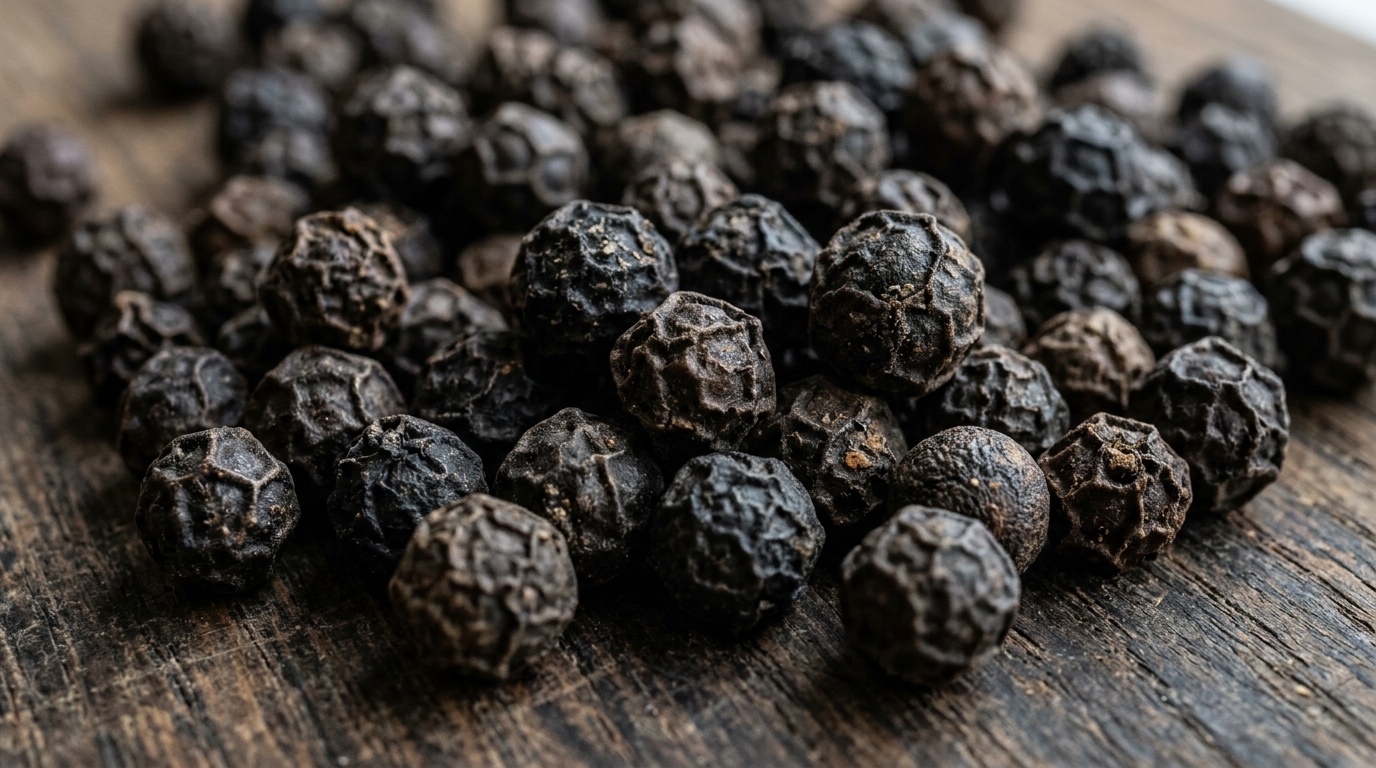
- Good Peppercorns: Seeds are plump, firm, and uniform in shape. Black peppercorns should display a deep dark brown or black color, while white peppercorns appear naturally off-white or pale cream.
- Spoiled Peppercorns: Seeds appear shriveled, crushed into dust, discolored, or covered with gray/faded patches
2. Checking Aroma and Flavor
Aroma is the soul of any spice. A loss of smell indicates deterioration:
- Good Peppercorns: Releasing a freshly crushed peppercorn yields a sharp, pungent, and warm spicy aroma.
- Spoiled Peppercorns: The characteristic aroma vanishes, replaced by a dusty, stale, rancid, or distinctly musty smell.
3. Identifying Mold and Moisture Build-Up
Mold growth is the ultimate warning sign when checking how to tell if peppercorns are spoiled:
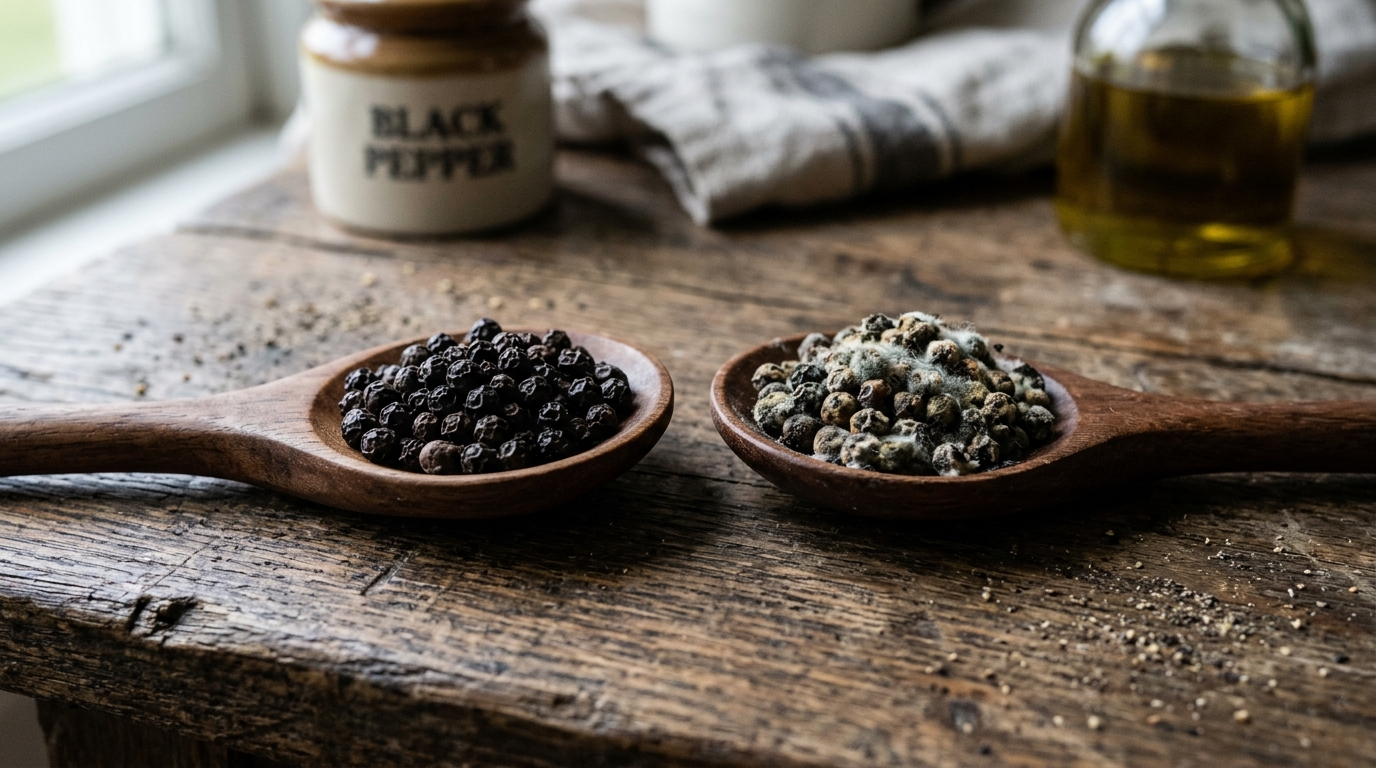
- Good Peppercorns: The surface feels completely dry to the touch, and individual seeds roll freely without sticking together.
- Spoiled Peppercorns: You may see fine white, green, gray, or black fuzz nestled in the ridges. High humidity often causes the peppercorns to clump together. If mold is visible, discard the entire batch immediately.
4. Best Practices for Storing Whole Peppercorns
Once you master how to tell if peppercorns are spoiled, keep your fresh batch potent with proper storage:
- Use Airtight Containers: Store peppercorns in sealed glass jars or airtight containers to block moisture.
- Keep in a Cool, Dark Place: Store away from direct sunlight, stovetops, and humid sink areas.
- Use Dry Utensils: Always use a dry spoon or spice grinder to prevent introducing moisture into the container.